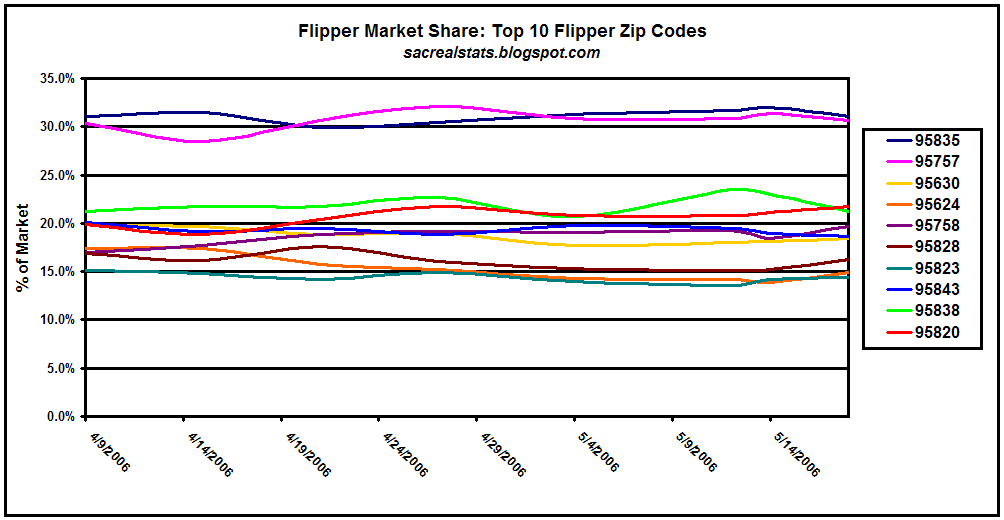
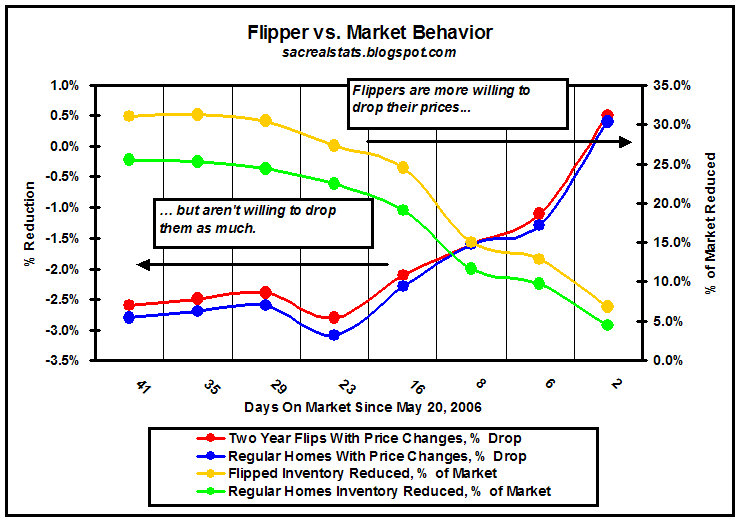
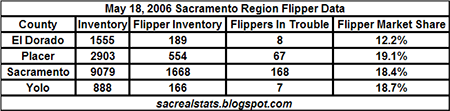
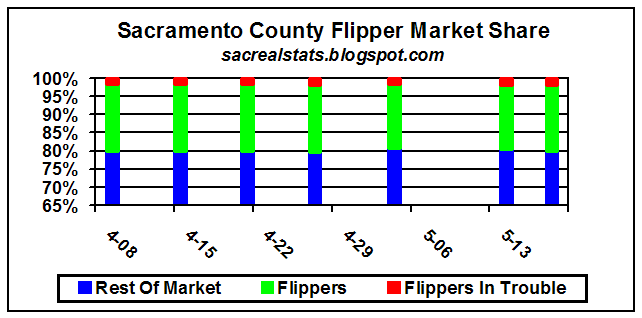
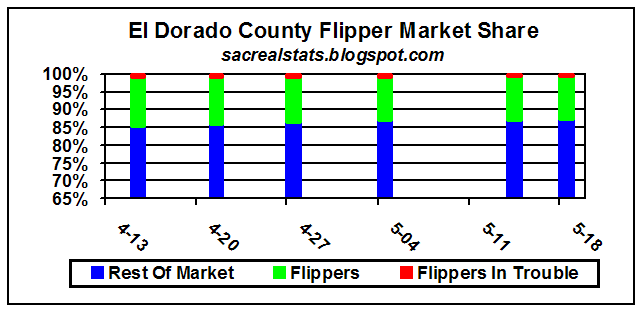
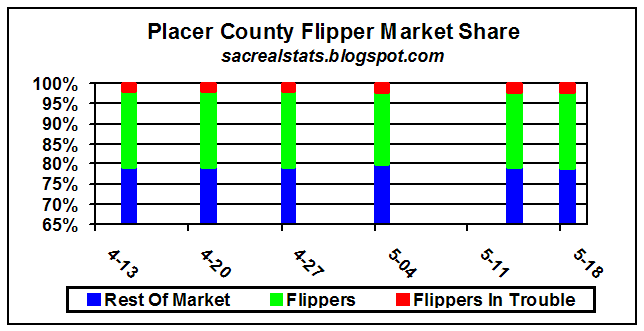
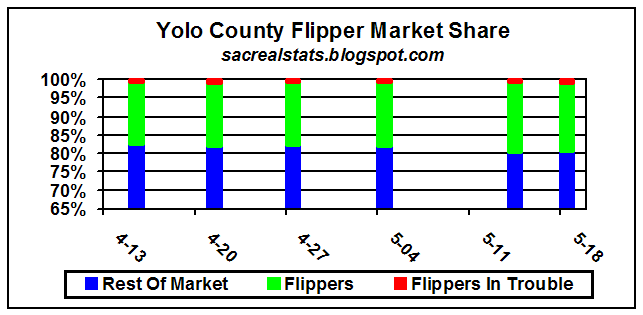
Flippers are interesting because presumably, they are purely economic in their motivation. They generally aren’t people ready to retire hoping to get the most for their empty nest, or people pulling up stakes to start a new life in Iowa or Boston. They are people who make a living buying and selling homes, and they need to turn a profit, or they’re out of business. In other words, flippers are to real estate what “smart money” is to the stock market. Because of this, we should be able to learn a lot about what the market is doing by observing flipper behavior.
So, how do you figure out if a home is being sold by a flipper, instead of by a regular person? One way is to look at previous sales. For the purposes of my calculations, I’m using a resale cutoff of two years. In other words, if the house was sold once before within the last two years, the current seller can be defined as an investor or flipper. You can also find a flipper in trouble if she’s selling a house for equal or less than what she paid for it.
For the purposes of this discussion, I’ve taken a slightly more nuanced view. I’m assuming these two things about our flipper:
· She’s a real estate insider, so she doesn’t pay the typical 5%+ in commissions a regular seller does.
· She’s got a lot of cash, so she has almost no carrying costs other than taxes, insurance, and upkeep.
In other words, what she paid for a property is roughly what she needs in order to break even. I’ve added a 2% “trouble bias” to take into account the intangibles like time and listing costs.
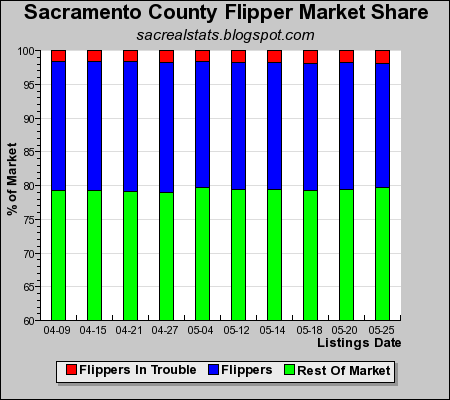
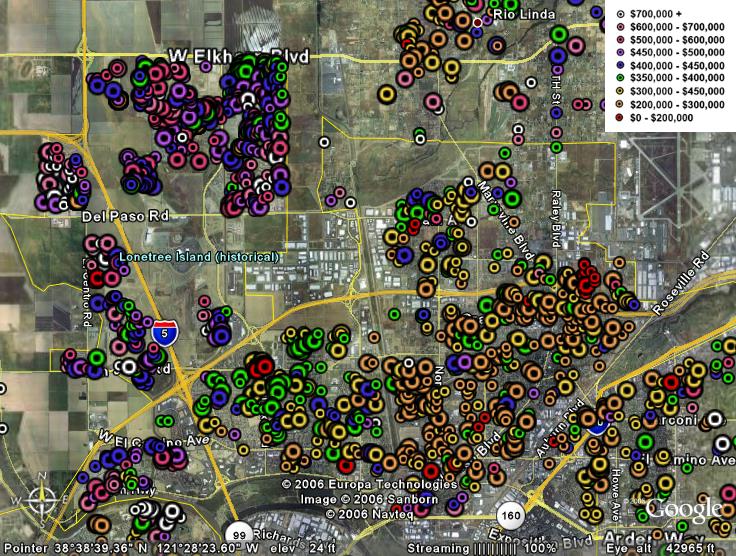
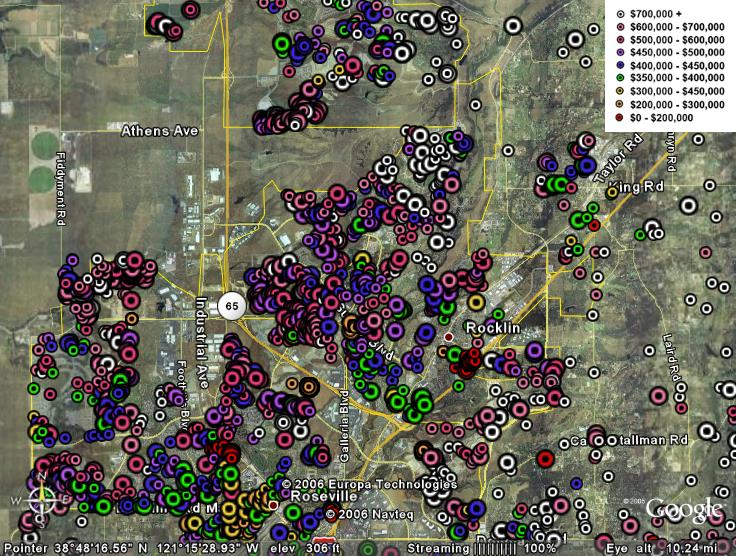
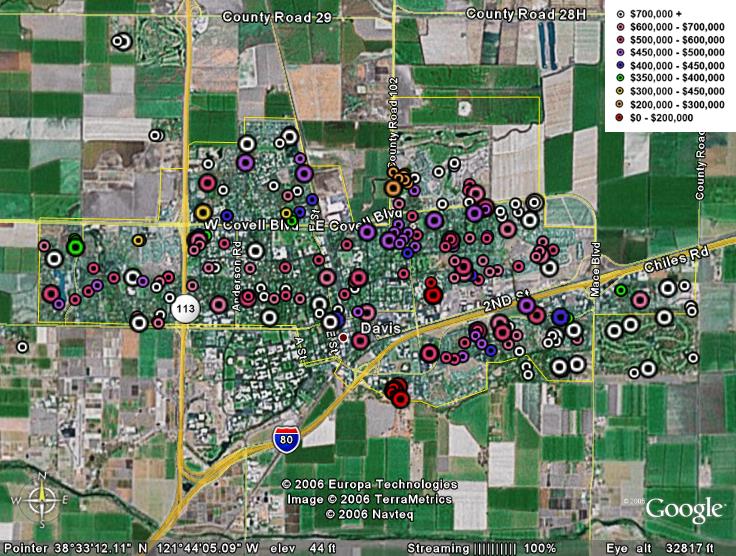
Using these criteria, I’ve compiled the following charts for the Sacramento Region. Two caveats: Since these data don’t take into account homes that were purchased new and are now being “resold” for the first time, the Flipper Market Share is almost certainly much higher than the numbers I have. (I’m working on a way to incorporate new home resales into the data, and I’ll report back in the future if I get any results.) Secondly, I have no idea how these data compare historically to flipper market share. Is 20% a high number? I have no idea. If anybody has a way to put this information into context, please email me.
Next post: Flipper Pricing vs. Market Pricing.
Max